
Wetsuits
A wetsuit is a special garment designed for water sports, used by enthusiasts of wakeboarding, water skiing, and other similar activities. It is mostly made of neoprene – a synthetic rubber that is waterproof, elastic, and has excellent thermal insulation properties.
The main purpose of a wetsuit is to protect the wearer from cold water. It works by trapping a thin layer of water between the skin and the wetsuit, which the body then warms up. This warmed layer of water helps maintain body temperature even in cooler conditions. Wetsuits are available in various thicknesses and cuts, depending on the intended use and water temperature.
In addition to thermal insulation, a wetsuit provides protection against UV radiation, wind, and other environmental factors. Thanks to its insulating and protective properties, it is essential gear for those spending long periods in the water, especially in cold conditions.
Differences between wetsuits
The right wetsuit for you depends on several factors: water temperature, the water sport you practice, and your body type. When buying a wetsuit, it’s worth considering the following aspects:
Thickness:
Wetsuit thickness is measured in millimeters (mm). The thicker the wetsuit, the better the
heat retention and suitability for cold water. Thinner models are suitable for warmer conditions.
Cut (style):
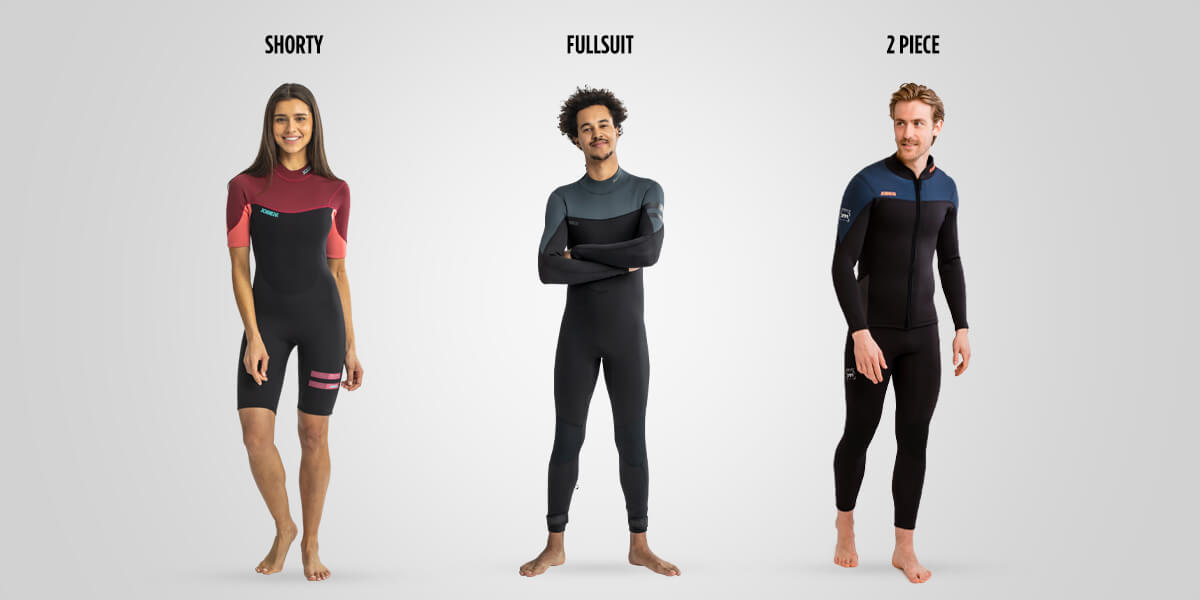
There are several types of wetsuits – fullsuits and shorties.
- A fullsuit covers the entire body, including arms and legs, and is the warmest option.
- A shorty covers the torso and thighs, leaving the arms and lower legs free – it is a lighter
option designed for warmer waters.
Fit:
The right size is very important. A wetsuit that is too small is uncomfortable and restricts movement. A wetsuit that is too large
lets in too much water, reducing heat retention. The wetsuit must fit snugly around the
body but not restrict movement.
Material:
Neoprene is most commonly used, as it is durable and elastic. Higher quality wetsuits may
be made of limestone neoprene, which offers better
thermal insulation and durability.
Before buying, be sure to check the manufacturer’s size chart and consider the requirements of your specific
water sport.
Does wetsuit sizing correspond to regular clothing sizes?
Wetsuit sizes are generally similar to regular clothing sizes, but there are important differences.
A wetsuit must fit snugly around the body to ensure maximum thermal insulation and mobility. Therefore, it feels more form-fitting than regular clothes. Depending on preference (a tighter or slightly looser fit), it may be necessary to choose a size larger or smaller than usual.
A wetsuit should not be:
- too tight – this restricts range of motion and breathing,
- too loose – this lets water in and reduces warmth.
Also consider the thickness: a thicker wetsuit is stiffer and may require a slightly larger size; a thinner and more elastic model fits more snugly.
Which wetsuit for which water temperature?
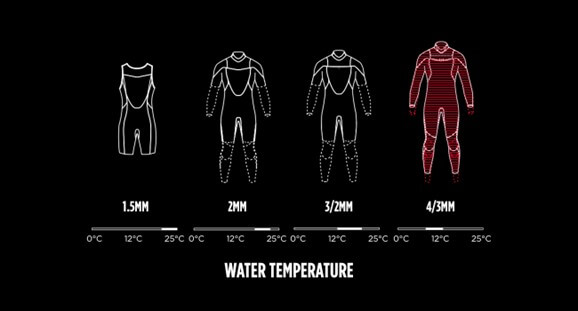
Wetsuit thickness is directly related to water temperature – the colder the water, the thicker the
wetsuit should be.
General recommendations:
- Below 14°C: fullsuit at least 4/3 mm
- 14–18°C: fullsuit at least 3/2 mm
- 18–24°C: shorty at least 2 mm
- Above 25°C: shorty about 1.5 mm
These are general guidelines. The appropriate thickness also depends on your cold tolerance, time spent in the water, wind strength, air temperature, and activity level (e.g., whether you are actively wakeboarding or swimming calmly).
Does a wetsuit keep you warm?
Yes, a wetsuit helps keep you warm by trapping a thin layer of water between the skin and the neoprene. The body warms up this layer of water, which acts as insulation against the cold water.
The thicker the wetsuit, the warmer it is. However, a wetsuit is not designed for extremely cold conditions. In very cold water, a drysuit or additional thermal layers may be necessary.
The feeling of warmth is also affected by:
- wind strength,
- air temperature,
- activity in the water,
- personal cold tolerance.
Can you swim in a wetsuit?
Wetsuits are widely used for swimming and other water sports. They provide thermal insulation and protect the skin from chafing and scratches.
It’s important to know that a wetsuit is not a life jacket or a flotation device. While it provides some buoyancy, it will not keep an unconscious person afloat. Therefore, water safety requirements should always be followed, and appropriate safety equipment should be used if necessary.
A wetsuit is also no substitute for a drysuit in very cold water.
Why does a wetsuit smell and how to avoid it?
A wetsuit can develop an unpleasant odor over time, especially if it is not rinsed and dried properly.
To reduce odor:
- Rinse the wetsuit with fresh water after each use (removes salt, sand, and dirt).
- Dry it completely before storing.
- Keep it in a well-ventilated place.
- Use special wetsuit cleaners or neoprene shampoos.
Proper maintenance extends the life of the wetsuit and keeps it fresh.
Which wetsuit is right for me?
Shorty wetsuits
A shorty is a wetsuit with short sleeves and legs that covers the torso and thighs, leaving the arms and
lower legs free.
It’s well-suited for warmer waters and is popular among wakeboarding, SUP (paddleboarding), and other active water sports enthusiasts.
Advantages:
- better mobility,
- easier to put on and take off,
- convenient for frequently getting in and out of the water.
Shorty wetsuits are available in thicknesses such as 1.5 mm, 2 mm, and 3/2 mm.
Fullsuit wetsuits
A fullsuit covers the entire body – including arms and legs. It offers maximum thermal insulation and protection from cold water.
Ideal for cool and cold waters and longer periods in the water.
Advantages:
- better heat retention,
- better protection from wind and cold,
- a snug fit reduces water entry.
Available in thicknesses of 2 mm, 3/2 mm, 4/3 mm, and 5/3 mm.
Two-piece wetsuits
A two-piece wetsuit consists of separate top and bottom parts.
Advantages:
- greater flexibility and freedom of movement,
- ability to combine different thicknesses for the top and bottom,
- easier to put on and take off.
It’s a practical choice for those who want to customize their gear according to water temperature and
activity.
