
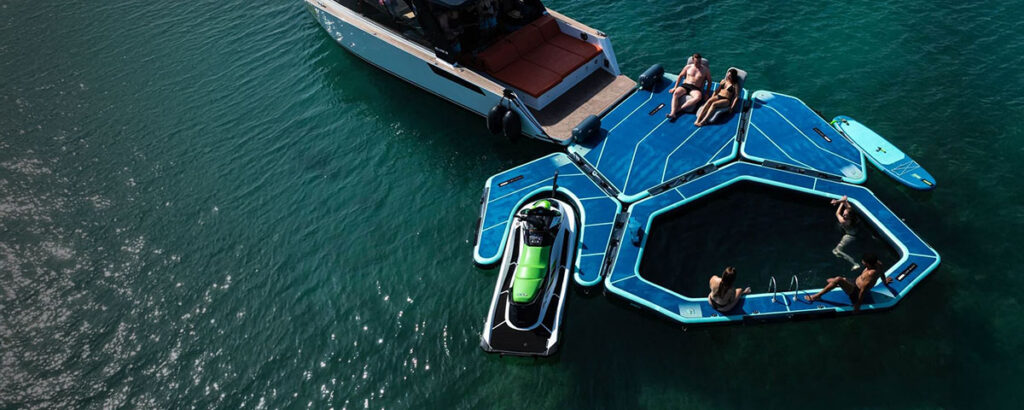
Life Jackets
A life jacket, also known as a personal flotation device (PFD), is a back-worn device designed to keep a person afloat in water. PFDs are typically worn around the torso and secured with straps or buckles. The outer part of the vest is usually made from materials such as neoprene, nylon, or polyester and is intended to provide buoyancy and support in water. The inner part typically consists of foam-like materials, such as EPE or PVC.
You can find a variety of life jackets in our online store here >
Differences of life jackets
The type of life jacket you need depends on several factors – the type of water activity, your body shape and size, the need for freedom of movement, and any special requirements. Here are some general guidelines for choosing a life jacket:
- Consider the type of activity. Different life jackets are designed for specific activities, such as boating, wakeboarding, or waterskiing. Choose a vest that suits you. For example, wakeboarding and waterskiing require more freedom of movement than tubing.
- Consider your body shape and size. Life jackets come in different sizes to fit various body types. Choose a vest that fits snugly and comfortably.
- Consider special requirements. Some life jackets are specifically designed for children or people with special needs.
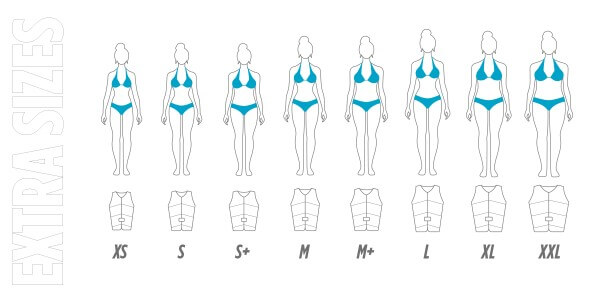
It is important to choose a life jacket that fits well and is designed for your activity. Using the wrong size or an unsuitable vest can be dangerous. In emergencies, it is recommended to use a life jacket (100N) instead of a flotation vest – in some countries, this is even mandatory. Always check local laws regarding buoyancy requirements. To achieve the perfect fit, we have added several intermediate and plus sizes. These are similar to standard sizes but provide more room around the waist.
To achieve the perfect fit, we have added several intermediate and plus sizes. These are similar to standard sizes but provide more room around the waist.
How should a life jacket fit?
- A life jacket should fit snugly and comfortably. It should not be too loose or too tight.
Tips for ensuring the correct fit:
- Adjust the straps so the vest fits tightly around the body. The vest should not shift during movement.
- Make sure the vest covers the chest and reaches the waist.
- Check that the armholes are not too large or too small – they should allow freedom of movement but not so much that the vest rides up.
- Raise your arms above your head – the vest should not shift or ride up.
Bonus tip: have a friend stand behind you and pull the vest up from the shoulder straps – if the vest stays roughly in place, it is the right size!
Note that different types of life jackets may fit differently – always follow the manufacturer’s instructions.
Can life jackets be washed?
Yes, life jackets (PFDs) can generally be washed, but specific instructions depend on the material and type.
General washing instructions:
- Check the care instructions on the vest or the manufacturer’s website. Some life jackets can be machine washed, while others are hand wash only.
- Use lukewarm water and a mild detergent. Avoid bleach and harsh chemicals, as they can damage the material and reduce buoyancy.
- Rinse the vest thoroughly to remove all soap.
- Allow the vest to air dry completely. Avoid direct sunlight and heat sources.
A well-maintained and clean life jacket ensures the required buoyancy and extends the product’s lifespan.
Which life jacket suits me?
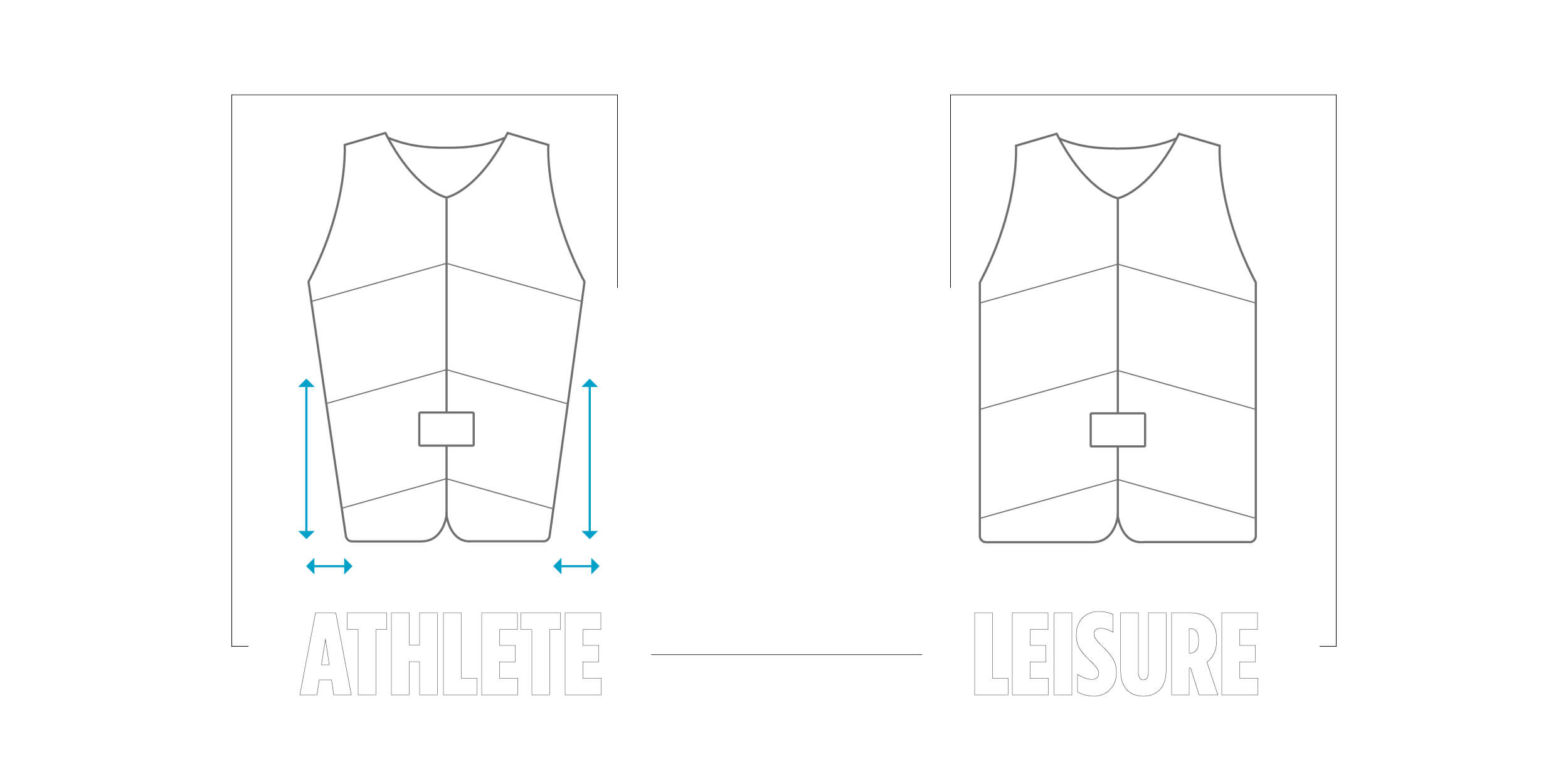
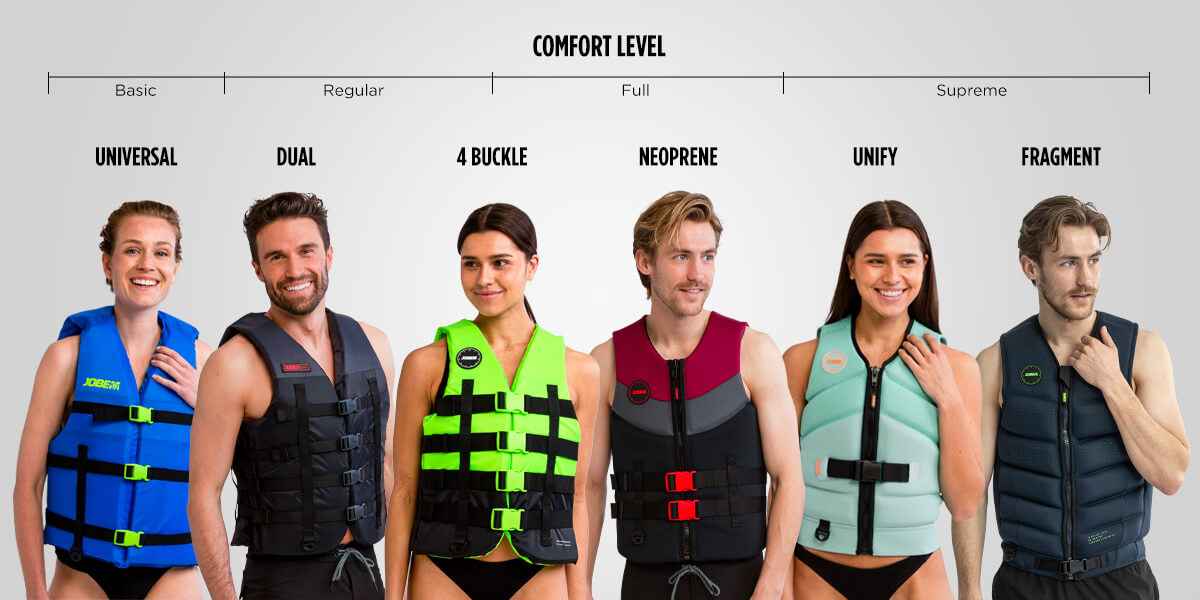
Jobe life jackets combine comfort and safety. The choice depends on what you need the vest for and how flexible it needs to be. For example, wakeboarding or slalom waterskiing requires more freedom of movement than sitting on a tube. This is influenced by the foam panel layout – the more segmented the foam panels, the more flexible and comfortable the vest.
All Jobe life jackets have at least 50N buoyancy and are ISO certified. We also offer 100N life jackets, which are officially ISO certified and provide even greater buoyancy. In the American market, 70N is required, so 100N is the best choice there.
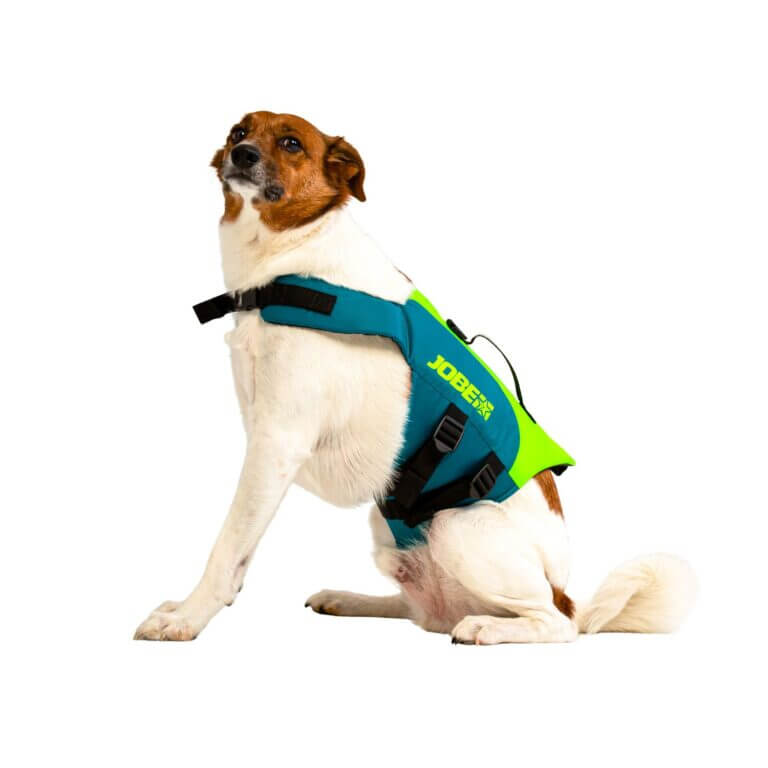
Life jackets for dogs
We don’t provide safety only for people, but also for our loyal four-legged friends. Dog life jackets are designed to keep them safe and afloat in water. They are especially useful for dogs that are not strong swimmers, tire quickly, or tend to panic in water.
Remember that a life jacket does not replace supervision – dogs should always be monitored. It is also good to teach basic water safety skills, such as exiting the water and swimming to shore or a boat.